
Have you ever experienced “fake” efficiency? When changes are made that look like improvements, but when someone actually goes through the process, it’s just as bad as before?
At the beginning of December, I took a trip to Italy with some college girlfriends to celebrate a milestone birthday. Three of us had been to Italy before, but the birthday girl had not, so we made sure that she saw everything in Rome that is important. On our second day there, we toured the Vatican.
I don’t know if you’ve ever been to the Vatican, but it’s an amazing experience, full of beautiful artwork and history. To reach the Sistine Chapel, you must first pass through the Vatican Museum. We booked a private tour with a local guide, and met her outside of the entrance at 9 AM. Despite tickets with restricted entry times, we immediately joined the back of a long line. There were two separate lines, one for guided tours and one for visitors exploring on their own. While timed entry sounds like a good idea, those long lines were the first sign that large crowds were still very much a problem.
We approached the entry point and had to show our tickets and passports to gain entry. Our guide had a special ID card to also gain entry, as she had to be registered with the Vatican to give tours. We entered the space and proceeded to the counter where they issued our guide a microphone and us headsets so that she could speak in a normal voice and we could hear her throughout the building. Instead of scanning the QR code on her Vatican ID and retrieving the equipment for us, the man behind the counter filled out a form by hand and then went to get everything. I stood there amazed that she wasn’t able to register online beforehand and easily get the equipment upon entry. We then proceeded to the courtyard to learn about the building.
Once we were in the courtyard, our guide wanted us to visit the signs explaining the scenes in the Sistine Chapel since talking is not allowed inside. However, there were fewer than ten signs available, and we had to wait for one to open up before we could learn about the artwork. This was another inefficiency that could have been avoided if more signs were provided. After discussing the murals, we headed inside to see the art collected by the popes.
Inside, the crowds thickened again as people stopped to see every room before moving on. Timed entry clearly was not solving the problem. Large tour groups fanned out to see the items on display, while their guides tried to wrangle them to the correct piece for discussion. Luckily, with only four people, we were able to navigate through pretty easily.
As we progressed through the museum, the crowds became smaller, probably because four people are easier to maneuver than twenty. At the end of a hallway, our guide asked the guards if we could take a staircase directly to the Sistine Chapel instead of entering through the main group route. We were ushered behind the velvet ropes and descended to Michaelangelo’s masterpiece.
Once inside, we encountered another dense crowd. Many visitors ignored the requests for silence and no photography, creating yet another bottleneck. After viewing the mesmerizing artwork, we exited down another staircase and headed to St. Peter’s Basilica. There, we were required to exchange our audio equipment for an entirely different system operated by another vendor, which caused another backup of visitors.
We moved slowly through the tombs of former popes with yet another crowd and eventually made our way into the Basilica itself. Thankfully, its size allowed people to spread out, making it easier to learn and appreciate the space.
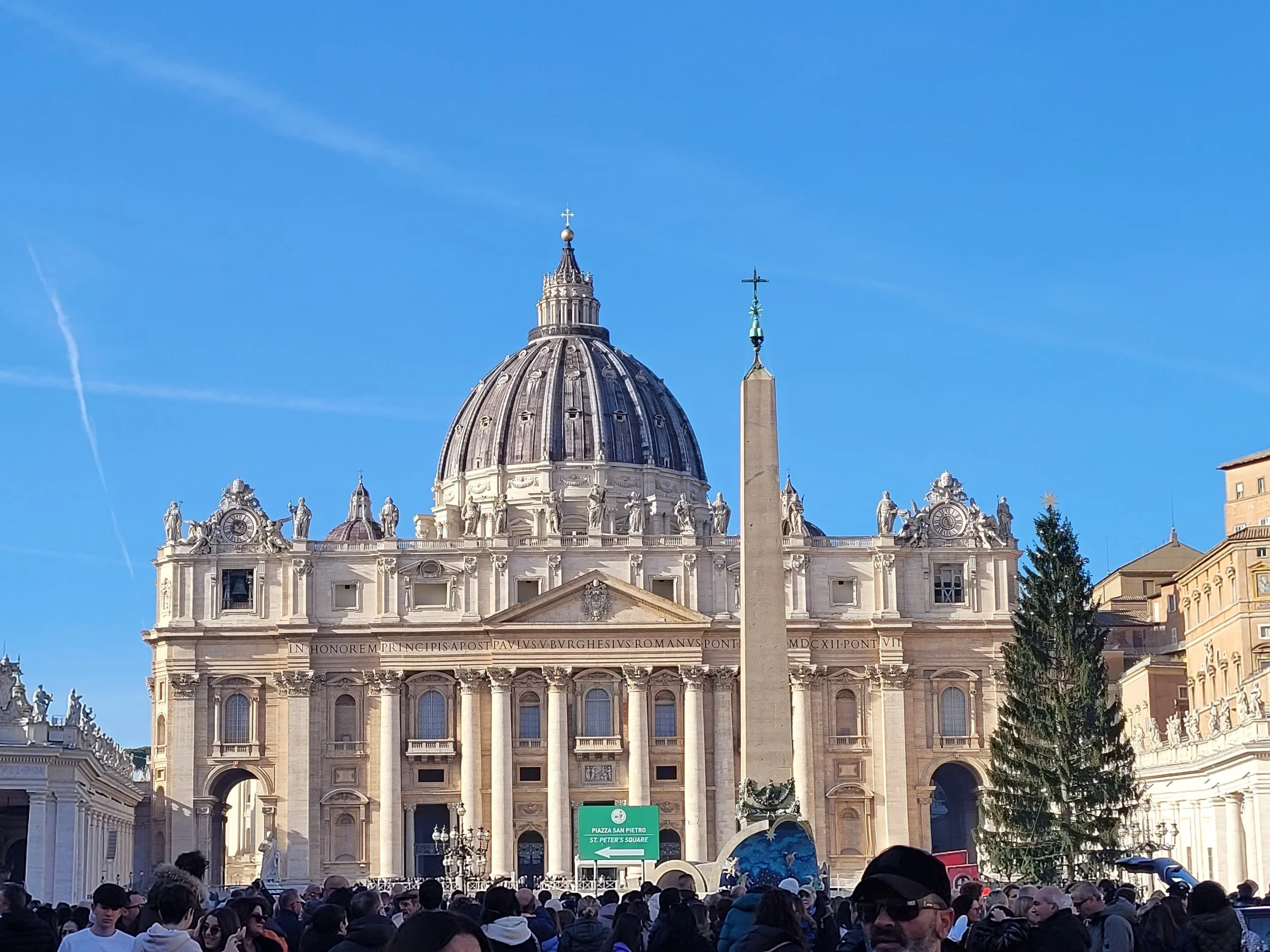
When we ended the tour, we gave our guide our second set of audio equipment and made our way through St. Peter’s Square to capture the amazing view in its entirety. Now, most people just shrug their shoulders and say “it’s Italy” when discussing these inefficiencies. But I can’t help seeing how the visitor experience could be improved, and how employees could be redeployed to better serve them.
This is what fake efficiency looks like. Timed entry works well at places like Disney because once people enter, they can spread out across a large area. That same approach does not work in a museum with narrow hallways or in a chapel where movement is limited. The Vatican implemented a solution that looked efficient without addressing the real constraint.
Businesses do this all the time. They adopt solutions that work somewhere else, make surface level changes, and assume improvement will follow. Real efficiency requires understanding the specific business, identifying the true bottlenecks, and making changes that actually address them.
If the changes you are making look good on paper but do not feel better in practice, it may be time to take a closer look. Sometimes what is needed is not another system or policy, but an outside perspective that can identify inefficiencies and recommend changes that are tailored to how your business actually operates. Reach out to Beck Insights if you’re ready for practical change.
